Welcome to the official website of Hubei ZhengJiu New Materials Technology Co., Ltd.!



The Legendary Life of Kipping, the Father of Silicone
2025-07-04
The Legendary Life of Kipping, the Father of Silicone
A Chemical Pioneer, from the Laboratory to the Battlefield: How the "Father of Silicone" Changed the World with Chemistry? ——Frederic Stanley Kipping ’s legendary life (as shown in the figure below).
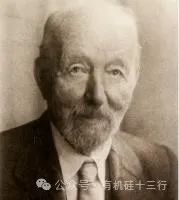
#Who is he?
In the history of chemistry, there was such a "cross-border genius":
He is the founder of silicon chemistry, coined the term "silicone," and laid the foundation for the modern organosilicon industry;
His research results "saved airplanes" during World War II, and was jokingly said by Dow Corning executives to have "won the war with Churchill";
His family can be called a "chemist family," with his wife's sisters marrying two Nobel Prize-level scientists...
He is Frederic Stanley Kipping (1863-1949), a legendary figure who illuminated the scientific starry sky with wisdom and humor.
#From "niche research" to "industrial revolution": How did he rewrite the history of chemistry?
1. "Accidental Naming" in the Laboratory
In 1904, while studying silicon compounds, Kipping discovered a class of substances composed of silicon, oxygen, and organic groups. He created the term "silicone" by analogy with organic ketones (RR’CO) — although it was later discovered that silicones have completely different chemical properties from ketones, the name is still used today, marking the starting point of the silicone industry with an annual output value exceeding US$8 billion.
2. The "Godsend" of Grignard Reagents
In terms of synthesis methods, Kipping was "the first to try":
He was the first to use Grignard reagents to prepare alkyl silicones and aryl silicones, replacing the earlier inefficient organozinc reagents;
Through the dehydration reaction of silanediols, he synthesized the first silicone oligomer (although at the time it was called a "sticky substance with no specific use").
These studies were recorded in 57 papers published between 1899 and 1944, 53 of which were published in the Journal of the Chemical Society, laying the groundwork for subsequent research on silicon materials.
3. The "Invisible Hero" on the Battlefield of World War II
In 1942, based on Kipping's research, Dow Corning developed Dow Corning silicone grease. This material was used in aircraft ignition systems, solving the problem of traditional insulating materials (such as shellac) being easily punctured by corona discharge at high altitudes.
Key data: After using silicone grease, Allied aircraft could fly continuously at 35,000 feet for 8 hours, directly transporting across the Atlantic to Britain and North Africa, shortening the transportation time by 90%, and was called the "most critical breakthrough in the wartime plastics field" by the journal Chemical and Metallurgical Engineering.
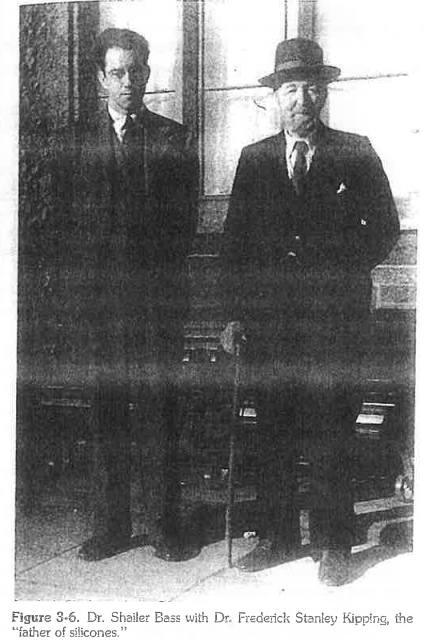
Dow Corning executive Shailer L. Bass (left in the figure below) once jokingly said to Kipping (right in the figure below): "You and Churchill won World War II together!"
#An "Slash Life" in Academia: Professor, Writer, Sports Enthusiast
1. "Hardcore" Textbook and "Soft" Family
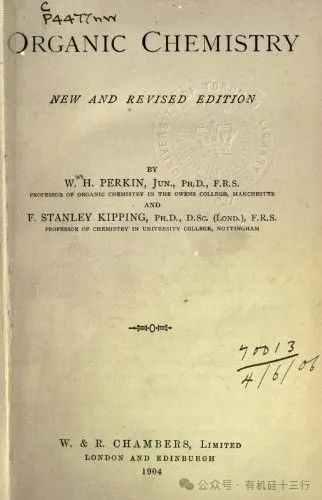
The textbook *Organic Chemistry*, co-authored with his mentor Perkin Jr. (first edition in 1894, shown in the figure below), became a "red book" for chemistry students worldwide, revised for 45 years, and its influence spanned half a century;
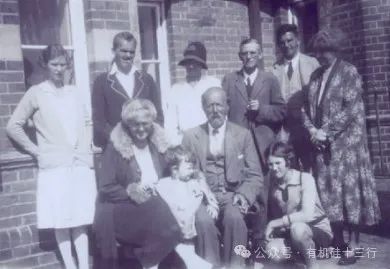
His family can be called an "academic team": his wife Lily's sister Mina married Perkin Jr., and her sister Kathleen (back row, right 1) married Arthur Lapworth (back row, right 3), a pioneer in physical organic chemistry. The three chemists formed an "academic iron triangle" through marriage.
- The "sharp-tongued professor" in the classroom and the "energetic old man" on the sports field. Students once played a prank in his mineralogy class, mixing in a bar of soap. When Kipping picked up the soap, he remained unfazed: "This is a piece of... impudence!"
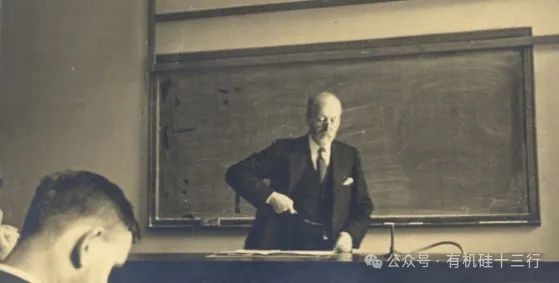
After retirement, he moved to Wales due to the European war situation, but enjoyed his time at the local golf course. The vice-chancellor of the University of Leeds joked: "His eternal youth is thanks to his skillful manipulation of 'cyclic compounds' on the golf course!"
#Eternal Legacy: From the Nobel Prize to "Chemical Landmark"
Awards and Honors:
He received the Longstaff Prize from the Chemical Society of London in 1909 and the Davy Medal from the Royal Society in 1918;
In 1960, Dow Corning established the Kipping Award, the first recipient of which was Eugene G. Rochow, a pioneer in the silicone industry; In 2004, the Royal Society of Chemistry established a "Historic Chemical Landmark" plaque at the University of Nottingham to commemorate the centenary of his synthesis of the first silicone polymer.
Spiritual Inheritance: The University of Nottingham established the Kipping undergraduate award in his legacy, rewarding the best chemistry student each year.
#Research Focus and Typical Compounds
During the period 1900–1910, Kipping focused on the synthesis and resolution of asymmetric silicon compounds. His core goal was to prepare compounds containing chiral silicon atoms through chemical methods and study their stereochemical properties. His main achievements include:
1. Chiral silanes containing aryl groups. By reacting Grignard reagents or organozinc reagents with silicon halides, different organic groups were introduced to obtain compounds in which the silicon atom is connected to aryl groups (such as benzyl, phenyl), alkyl groups (such as ethyl, propyl), and halogens (such as chlorine).
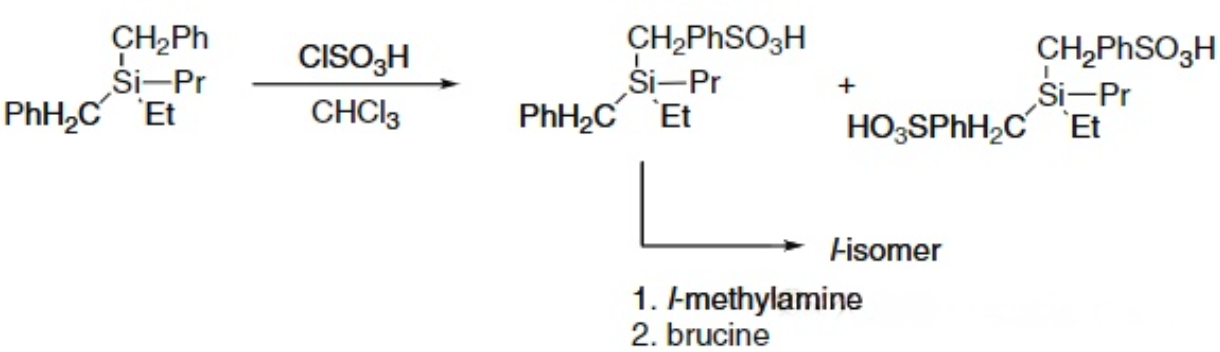
2. Sulfonated derivatives of chiral silicon compounds. Chiral silicon compounds were converted into sulfonic acid derivatives, and crystalline resolution was performed using natural chiral bases (such as **brucine**).
3. Expansion of the structure of chiral silicon compounds containing heteroatoms: Silicon atoms are connected to groups containing heteroatoms such as sulfur and nitrogen, such as sulfonic acid groups and amino groups, further enriching the environment of the chiral center.
Kipping's research first proved that silicon atoms can serve as chiral centers, expanding the scope of stereochemistry (traditionally centered on carbon atoms). His experiments confirmed that silicon's tetrahedral configuration allows for differences in group spatial arrangement, laying the theoretical foundation for subsequent silicon-based chiral catalysts and materials. Developed silane sulfonic acid - chiral base resolution method (as shown below), which became a general strategy for the early separation of chiral silicon compounds. It promoted the application of Grignard reagents in asymmetric synthesis, providing tools for the precise preparation of complex silicon compounds.
#Further Reading
Dow Corning official historical materials: Dow Corning monograph "Forty Years of Pioneers"
The Holland Sisters: The legendary story of three chemists' wives (semi-fictional biography)
Frederic Stanley Kipping—Pioneer in Silicon Chemistry: His Life & Legacy
The charm of science is never limited to the laboratory. Kipping's life proves that when curiosity meets perseverance, even niche research can change the world.
Disclaimer: The text, pictures, and data above are from the Internet, WeChat official accounts, relevant enterprises and other public channels. We maintain a neutral attitude towards the views in the text, and this article is for industry reference only.
Get Information
Learn more about ZhengJiu New Materials Company, and get updated product information.
Address: No. 29, Xingye Road, Qingji Industrial Park, Gong'an County, Jingzhou City, Hubei Province
Telephone:+86-716-5103131 / Peak+8613331898180
Fax: +86-716-5103131
Email:sales@hbzjxc.com

Copyright © 2025 Hubei ZhengJiu New Materials Technology Co., Ltd.
Powered by www.300.cn This website supports dual access of IPV4/IPV6.